home gym recovery equipment small apartment canada
Home Gym Recovery Setup for Small Canadian Apartments: What Fits in Under 20 Square Feet
The FitAmplify Team · Reviewed by Ms. Shivani Tomar, RD, Registered (clinical) Dietician, M.Sc Nutrition, 12 years' experience · Updated August 2026 · 12 min read
Recovery isn't optional, it's the other half of training, and finding home gym recovery equipment small apartment canada shoppers can actually fit in a closet is easier than it sounds. Sleep matters most: elite and sub-elite athletes both rank it their top recovery tool, and Canada's own guidelines call for 7 to 9 hours nightly. Foam rolling backs that up, easing soreness without hurting performance. The right compact gear supports both.
What Counts as Recovery Equipment
Recovery equipment isn't a separate category from your workout gear, it's the stuff that helps your body actually absorb the training you just did. Think foam rollers, massage balls, resistance bands for mobility work, and any home health monitoring tool that shows you whether the recovery is working, not just the workout. A foam roller earns its shelf space here: research shows it eases soreness after training and helps limit adhesion formation while tissue repairs itself, and a broader review found it useful for recovery from muscle damage without hurting other performance measures.
But recovery gear on its own is incomplete. Sleep still outranks everything else, athletes at every level call it their top recovery tool, and Canada's movement guidelines back that up, recommending 7 to 9 hours a night on a consistent schedule. That's why the most useful home gym essential equipment list for a small apartment pairs physical tools with tracking. A smart body-composition scale rounds out the picture by tracking body comp trends over time, muscle mass, hydration, and how your body responds week to week, so recovery stops being guesswork and starts being something you can actually see.
How Much Space Do You Actually Need
Less than you'd think. Most home gym essential equipment for recovery fits in a closet or under a bed frame, and none of it needs a dedicated room. A foam roller, a resistance band set, and a stability ball take up roughly the footprint of a suitcase, yet they cover the bulk of what recovery work actually requires.
That matters in Canada, where apartment space is tight to begin with. Toronto and Vancouver condos have some of the smallest median living areas in the country, at 840 and 854 square feet. Planning a home gym around that reality means picking gear that earns its shelf space, not gear that just looks the part in a store display.
Storage and noise in a rental
Foam rolling is a good test case. It's backed by evidence for easing exercise-induced muscle soreness without hurting performance elsewhere, and a basic roller stores flat against a wall or under a couch. Compare that to a massage gun or a vibration platform, which need an outlet, a charging routine, and enough clearance that a neighbour downstairs might notice.
If you're renting, quiet and compact wins. An advanced smart scale adds almost nothing to your footprint since it lives flat on the bathroom floor, yet it still gives you data a foam roller never could.
Recovery Gear Compared for Small Spaces
Not every piece of recovery gear pulls its weight in a one-bedroom rental. Some tools do double duty as data sources, tracking what your body is actually doing between workouts, while others just take up closet space. Sleep still ranks as the recovery habit athletes lean on most, so anything that helps you track how well you're resting or refueling earns a spot on the shelf before anything bulkier does.
Pairing carbs with protein after a workout also supports better recovery than carbs alone, which is worth remembering before you spend on gadgets and skip the basics. Foam rolling still holds up here too, easing soreness with no real downside to performance. The table below rates common options on an editorial 1 to 5 scale for how much room they demand, not a lab measurement, just a practical gut check for apartment living.
| Gear | Space needed (1-5) | Needs power | Best for |
|---|---|---|---|
| Foam roller | 2 | No | Muscle soreness after training |
| Massage gun | 2 | Yes | Targeted spot relief |
| Vibration platform | 5 | Yes | Full-body recovery sessions |
| Hume Health Body Pod | 3 | Yes | Detailed body composition scans |
| Mi Body Composition Scale 2 (Xiaomi Home app) | 1 | No | Quick weight and BMI checks |
| Withings blood pressure monitor | 1 | No | Tracking cardiovascular recovery |
| FitAmplify Smart Scale | 1 | No | 56+ metrics from one daily scan |
A scale that sits flat under the sink beats a platform that needs its own corner of the living room. If you want help reading what those numbers actually mean for your recovery, you can always talk to a registered dietitian instead of guessing.
Smart Scales and Trackers Compared
Not every recovery tool needs a screen, an app, or a subscription. Some just need to give you one honest number each morning so you can see whether your body is bouncing back or still running on empty. That's really what a smart scale or tracker is for in a small apartment: fast, repeatable feedback without extra gear cluttering your floor.
Accuracy matters more than feature count here. Wearables vary a lot in how closely they match clinical measurements. One 536-night validation study found Oura rings had the strongest agreement with ECG readings for resting heart rate and heart rate variability, while other wearables ranged from poor to solid agreement. That's worth remembering before you trust any single device as gospel. It's also worth remembering that home body-composition scales use bioelectrical impedance, which is a useful trend tool, not a diagnostic one.
| Device | Metrics Tracked (#) | App Required | Best For |
|---|---|---|---|
| Oura Ring | 5 | Yes | Sleep and HRV tracking |
| Hume Body Pod | 3 | Yes | Detailed body composition scans |
| Mi Body Composition Scale 2 | 1 | No | Quick weight and BMI checks |
| Withings blood pressure monitor | 1 | No | Tracking cardiovascular recovery |
| FitAmplify Smart Scale | 1 | No | 56+ metrics from one daily scan |
For apartment living, fewer devices usually means better data. A single gym technology smart scale that pairs to the free FitAmplify app can replace three separate gadgets, and it won't eat into the shelf space you're already fighting for. If you're weighing options, look for accurate smart scales with segmental readings over ones that only spit out a single weight number, since recovery shows up in more places than the scale alone. And if body composition is your main interest, something like the Hume Body Pod sits in a different category than a simple tracker, built more for detailed scans than daily convenience.
How to Measure If Recovery Is Working
Numbers alone won't tell you if recovery is actually happening. A body fat percentage that ticks down or a weight that holds steady after a hard week only means something when you look at it alongside how your body actually feels. That's why pairing a gym scale with app tracking gives you more useful data than a single reading ever could.
Some markers are worth knowing about even if you can't test them at home. Heart rate variability, for example, reflects the balance between your sympathetic and parasympathetic nervous systems. A high HRV generally points to good adaptation, while a low HRV can signal your body isn't bouncing back the way it should. You won't get HRV from a bathroom scale, but it's a good reminder that recovery is bigger than one metric.
Tools like foam rollers help too. Research shows foam rolling can ease soreness after training and support the recovery process by limiting adhesion during tissue repair, and a broader review found it useful for recovering from exercise-induced muscle damage without hurting other performance measures. Refueling matters as well: pairing protein with carbohydrate after a workout improves net protein balance compared to carbs alone.
Reading trends, not daily numbers
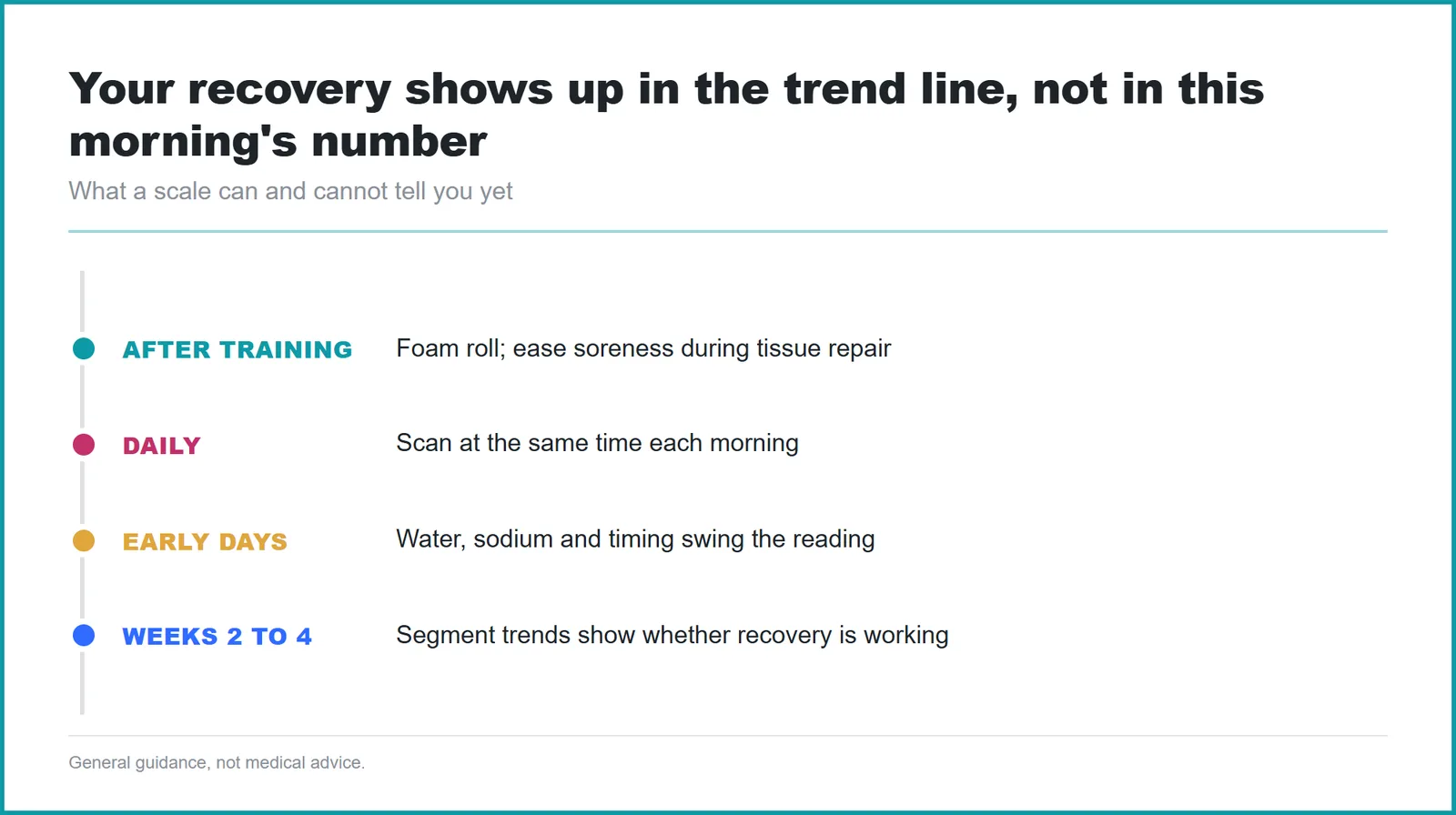
Body comp shifts day to day from water, sodium, and timing, not just fat or muscle change. Look at your body segment breakdown over two to four weeks instead of one scan. That trend line, not the daily number, tells you if your recovery routine is actually working.
What Canadian Buyers Should Check First
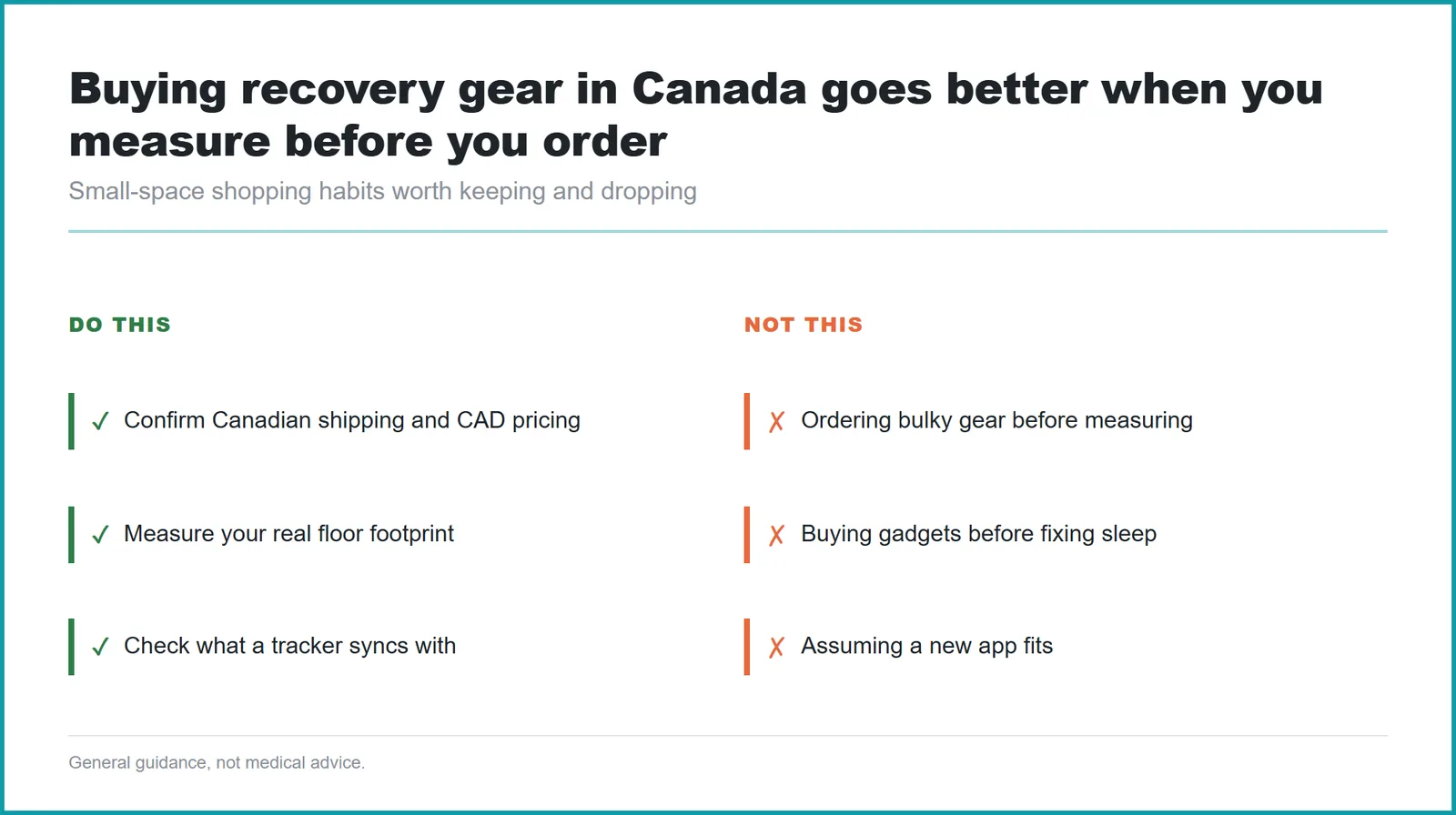
Buying recovery gear in Canada comes with a few extra questions worth answering before you pay. Run through this checklist first.
- Confirm the seller ships to Canada and prices in CAD. Duties and slow customs holds can turn a good deal into a headache.
- Check your actual floor space, not just your room's listing size. Toronto and Vancouver condos have some of the smallest median living areas in the country, at 840 and 854 square feet, so measure your real footprint before ordering anything bulky.
- Compare tracking tools by what they sync, not just what they measure. If you already have an account withings or a hume health band, check whether a new scale or app will sit alongside those or force you to switch ecosystems entirely.
- Look at whether the brand supports Canadian customers directly. fitamplify Canada users get access to real dietitians and coaches through the app, which matters more than an extra gadget once your gear starts piling up.
- Ask if the product tracks sleep, not just workouts. Canada's movement guidelines call for 7 to 9 hours of consistent, good-quality sleep, and foam rolling paired with proper rest does more for soreness than either one alone.
- Check the return policy before you unbox anything. Small-space buyers often need to size down or switch tools once they see how little room they actually have.
Small Apartment Recovery Setup Checklist
You do not need a spare room to build a real recovery routine. Here is a short checklist to work through before you buy anything.
- Start with one home gym essential piece of equipment, like a foam roller. It is small enough to store under a couch and has been shown to help recovery from exercise-induced muscle damage without hurting performance.
- Use it right after your workout. Foam rolling can ease soreness and support tissue repair by cutting down on adhesion formation.
- Protect your sleep before adding gear. Athletes at every level rank sleep as their top recovery tool, so a supportive mattress or blackout curtains may matter more than a second gadget.
- Pick a tracker that fits your life. Some Canadians prefer an activity tracker that looks like a watch, while others want an ECG wrist watch style device that also reads heart rhythm patterns.
- Watch your HRV trends over time, since a higher reading points to good adaptation and a lower one can signal you need more rest.
- Pair your free FitAmplify app with whatever gear you choose to keep every metric in one place.
FAQ
Do I need a foam roller if I already have a massage gun?
No. Foam rolling is well studied and shown to help with recovery from exercise-induced muscle damage without hurting your other workouts. It can also cut down soreness by limiting adhesions while your tissue repairs. A massage gun is a nice add-on, but in a small apartment, a foam roller does the core job for less shelf space.
What matters more for recovery, gear or sleep?
Sleep, by a wide margin. Athletes at every level rank it as their number one recovery tool, and Canada's own movement guidelines call for 7 to 9 hours a night on a steady schedule. Buy your gear after your sleep habits are in order, not before.
What is Hume Health and how does the Hume Band fit in?
Hume Health makes the Hume Band, a wearable some Canadians use to track recovery signals like heart rate alongside their training. It is one option among several trackers, not a requirement. If you already use the free FitAmplify app for body composition, a band like this just adds another data point to watch.
Should I get a smartwatch or something simpler?
That depends on your habits. An analog smartwatch hybrid gives you a normal-looking watch face with basic tracking underneath, which suits people who dislike a screen on their wrist. If you want deeper recovery data, a full-featured tracker paired with expert coaching from FitAmplify will tell you more.
Can recovery equipment replace medical advice?
No. None of this gear diagnoses or treats anything. If pain or fatigue persists, talk to a professional rather than relying on a gadget.
Conclusion
Recovery gear does not need a spare room. A foam roller, a light resistance band, and a consistent sleep schedule cover most of what small apartment recovery equipment in Canada actually needs to do. Sleep still does the heaviest lifting, so aim for the 7 to 9 hours Canada's 24-Hour Movement Guidelines recommend before you spend on anything else.
That is really the whole idea behind home gym recovery equipment for a small apartment in Canada: a few well-chosen pieces, used consistently, beat a closet full of gear you never touch. Track how your body responds, not just how much gear you own.
If you want to see the full picture behind your recovery, from muscle mass to hydration, FitAmplify Canada pairs an 8-point BIA smart scale with real coaches who can help you build a plan. Book a free consultation and find out what your next step should be.
References
- A Meta-Analysis of the Effects of Foam Rolling on Performance and Recovery, NCBI/PubMed Central
- 6 Benefits of Using Foam Rollers, American Council on Exercise (ACE)
- The Sleep and Recovery Practices of Athletes, NCBI/PubMed Central
- Adults 18-64 – 24-Hour Movement Guidelines, Canadian Society for Exercise Physiology (CSEP)
- Validation of nocturnal resting heart rate and heart rate variability in consumer wearables, NCBI/PubMed Central
- Heart Rate Variability Measurement through a Smart Wearable Device: Another Breakthrough for Personal Health Monitoring?, NCBI/PubMed Central
- Nutrition and Athletic Performance, Dietitians of Canada
- The Daily — Canadian Housing Statistics Program, Statistics Canada
FitAmplify is a wellness product and is not a medical device. It is not intended to diagnose, treat, cure, or prevent any disease. Always consult a qualified healthcare professional regarding any medical concern.