What Does Athlete Mode Do on a Smart Scale? Explained
Does Athlete Mode on a Smart Scale Actually Change Your Body Fat Number?
The FitAmplify Team · Reviewed by Ms. Shivani Tomar, RD, Registered (clinical) Dietician, M.Sc Nutrition, 12 years' experience · Updated August 2026 · 11 min read
Athlete mode changes how the scale reads your body, and if you have ever wondered what does athlete mode do on a smart scale, the short answer is simple: it recalibrates the math for people with more muscle and lower body fat. A regular body composition scale can misread lean, highly trained bodies as too lean, sometimes flagging numbers that dip into risky territory (below about 14% for women or 6% for men, per ACE). Athlete mode adjusts for that so your smart scale gives you a truer picture.
What Athlete Mode Actually Does
Under the hood, athlete mode swaps in a different set of formulas for turning electrical signals into numbers. A smart scale can't see muscle or fat directly, so it always relies on prediction equations, and athlete mode simply picks equations built with trained bodies in mind. The problem is that no BIA formulas for athletes have actually been validated against the gold-standard four-compartment method, the most rigorous way researchers measure body composition. So even the adjusted numbers are still an estimate, not a lab-grade reading.
That is true of every body fat scale smart enough to offer an athlete setting, not just yours. Toggling the mode won't fix a bad measurement window either. NIH guidance for accurate BIA readings says to avoid testing while dehydrated, within 4 hours of eating or drinking, with a full bladder, or within 12 hours of hard exercise. Any smart bathroom scale, athlete mode or not, will drift if you ignore those conditions. Think of athlete mode as a better-fitted lens on the same imperfect tool, not a fix for how the tool works.
How BIA Changes in Athlete Mode
A body composition scale doesn't measure fat directly. It sends a faint current through your body and reads how much resistance it meets, then runs that number through an equation to estimate fat, muscle, and water. Athlete mode swaps in a different equation, one built around bodies that carry more muscle and less fat than average.
That swap matters because the standard equation assumes a fairly typical ratio of muscle to fat. Push muscle mass up and body fat down past what the standard formula expects, and it starts overestimating fat percentage. The athlete equation corrects for that pattern, which is why the same scan can produce a noticeably different number in each mode.
Why hydration and muscle density matter
Muscle holds more water than fat does, so a body with more muscle conducts electricity differently than the formula's baseline. Any smart scale for body composition has to guess at hydration level to interpret that signal, and it's guessing off a general population, not off you. That's a real limit worth knowing: no BIA equation for athletes has actually been derived from four-compartment lab testing, the gold-standard method researchers use to validate body composition tools.
So even an advanced smart scale with an athlete setting is still extrapolating, not measuring water and muscle density directly. Because of that, watch your trend line over weeks rather than trusting one reading. And if a scan ever shows body fat under roughly 14% for women or 6% for men, treat it as a flag to check with a professional rather than a number to celebrate.
Normal Mode vs Athlete Mode
Both modes send the same faint electrical signal through your body. The difference is how the scale reads that signal back. Athlete mode assumes lower resting body fat and higher hydration from training, so it applies a different formula to the same raw data.
That adjustment can help if you train hard, but it does not make the scale more precise. No BIA formula, athlete or otherwise, has been validated against four-compartment lab testing for athletic populations. So think of the mode switch as a better-fitted estimate, not a shift to a more accurate smart scale.
| Factor | Normal Mode | Athlete Mode |
|---|---|---|
| Assumed hydration level (relative) | Standard | Higher |
| Assumed muscle mass (relative) | Standard | Higher |
| Recommended weekly readings (count) | 3 | 3 |
| Hours after exercise before testing (hours) | 12 | 12 |
| Hours after eating or drinking before testing (hours) | 4 | 4 |
Notice the last three rows match. Timing rules exist to protect accuracy on any smart digital scale, regardless of which mode you pick. If you are shopping for the best body composition scale for a training-heavy household, look past the mode toggle and check whether it supports multiple profiles in the app for each person's numbers.
Here is the part worth remembering when you are comparing options: no toggle on any device turns it into the most accurate smart scale on the market. Athlete mode changes the assumptions built into the formula, not the underlying measurement technology. Whichever scale you choose, the same testing conditions still apply, and the same caution around trusting a single reading still holds.
Who Should Turn Athlete Mode On
Athlete mode fits people who train hard enough that a standard formula misreads them: distance runners, strength athletes, and anyone doing structured workouts most days of the week. If you have noticeably more muscle and less fat than average, the regular setting can undercount your lean mass and overcount your fat, since it was built around a general population. Athlete mode adjusts for that pattern, which makes it worth trying if you fall into this group.
It will not turn a smart fitness scale into a lab instrument. Researchers have pointed out that no BIA prediction formulas have actually been built and tested against the gold-standard four-compartment method for athletes, so even the adjusted numbers are still an estimate, not a measurement. That is true whether you are using a renpho smart scale, a different brand, or the FitAmplify scale.
When to leave it off
Skip athlete mode if you are new to structured training or your body fat sits in a typical range. It is also not the right fix if you are already testing below about 6% body fat as a man or 14% as a woman, since ACE flags those levels as dangerously low regardless of what the scale shows. In that case, a reading is far less useful than a conversation, so talk to a registered dietitian instead of adjusting a toggle. For most people shopping for a smart scale for weight tracking, the general mode is the safer starting point.
How to Set Up Athlete Mode
Turning it on takes less than a minute. Follow this checklist:
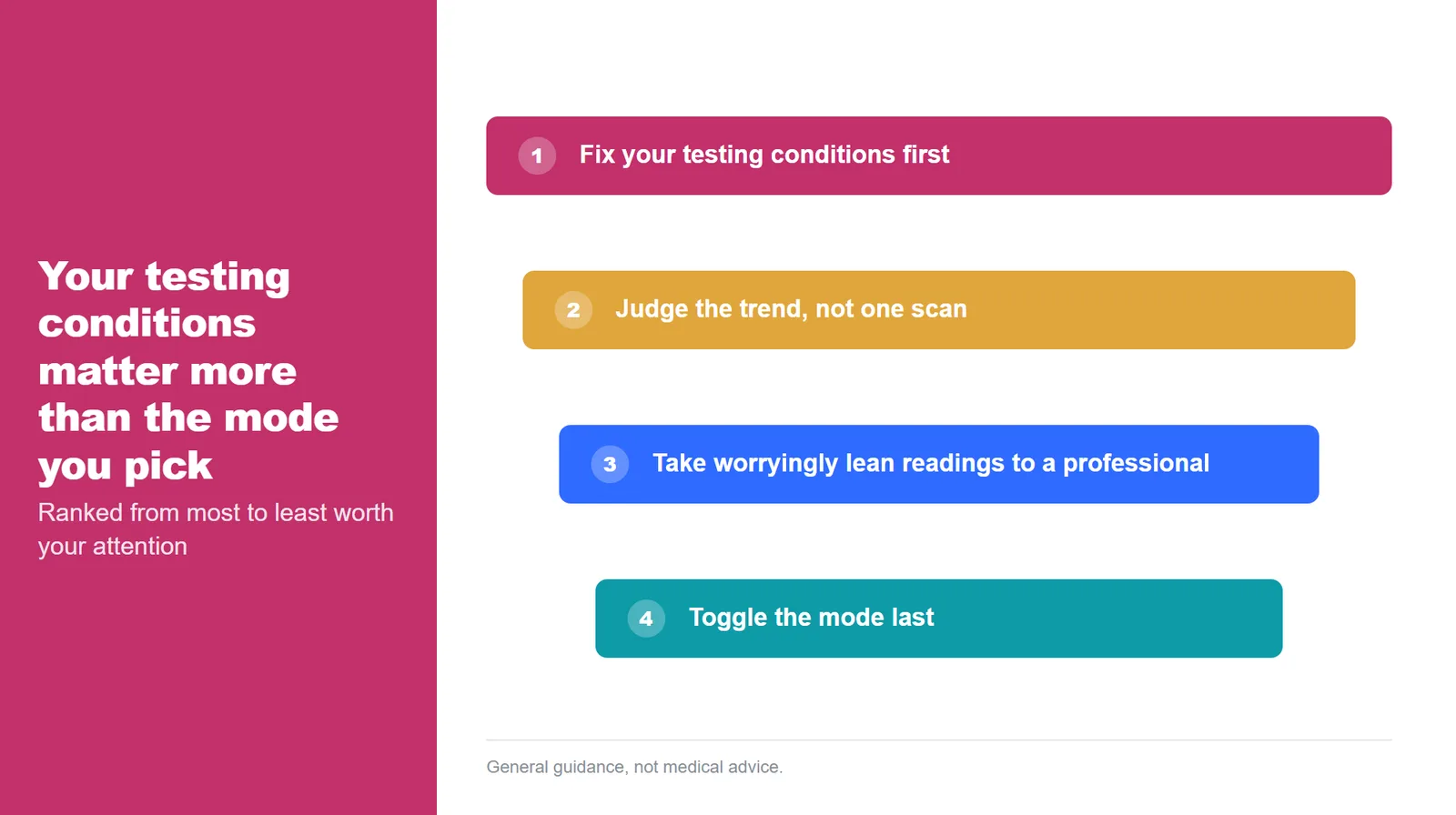
- Weigh in under the right conditions. Avoid dehydration, food or drink within the last 4 hours, a full bladder, or moderate-to-strenuous exercise in the past 12 hours. These are NIH recommendations for any valid BIA reading, and athlete mode does not override them.
- Open your smart scale app and find your profile settings.
- Toggle athlete mode on for that profile only. Each person syncing to the smart bluetooth scale needs their own profile, so a partner or teammate in normal mode stays unaffected.
- Step on the scale as usual. The reading recalculates using the athlete algorithm automatically.
- Track trends, not single scans. One number from any smart scale application is a snapshot, not a diagnosis, especially given how little BIA research exists for trained bodies.
If you're building this into a broader coaching setup, the FitAmplify app keeps profiles, history, and mode settings organized in one place, so nothing gets mixed up between users.
What Athlete Mode Will Not Fix
Athlete Mode changes the math, not the reality of what BIA can measure. No BIA prediction equations for athletes have actually been derived from the four-compartment method, which is the gold standard researchers use to validate body composition tools. That means even the best body fat scale on the market is still working from a formula built for general users and adjusted, not one built from scratch for trained bodies.
It also will not correct bad testing conditions. If you weigh in dehydrated, right after a meal, with a full bladder, or within 12 hours of a hard workout, your bluetooth smart weight scale reading will drift regardless of which mode you use. Athlete Mode assumes you already followed the basics.
And it will not tell you when a number looks dangerously low rather than impressively lean. A body fat reading under about 14% for women or 6% for men falls into a range ACE flags as dangerously low, not a personal best. A smart weigh scale can show you the trend line, but interpreting whether that trend is healthy is a conversation to have with someone qualified, not a setting to toggle. If a reading ever looks off or worryingly extreme, that's worth a real conversation, and you can book a free consultation with an actual expert instead of guessing.
What to Look For When Comparing Scales
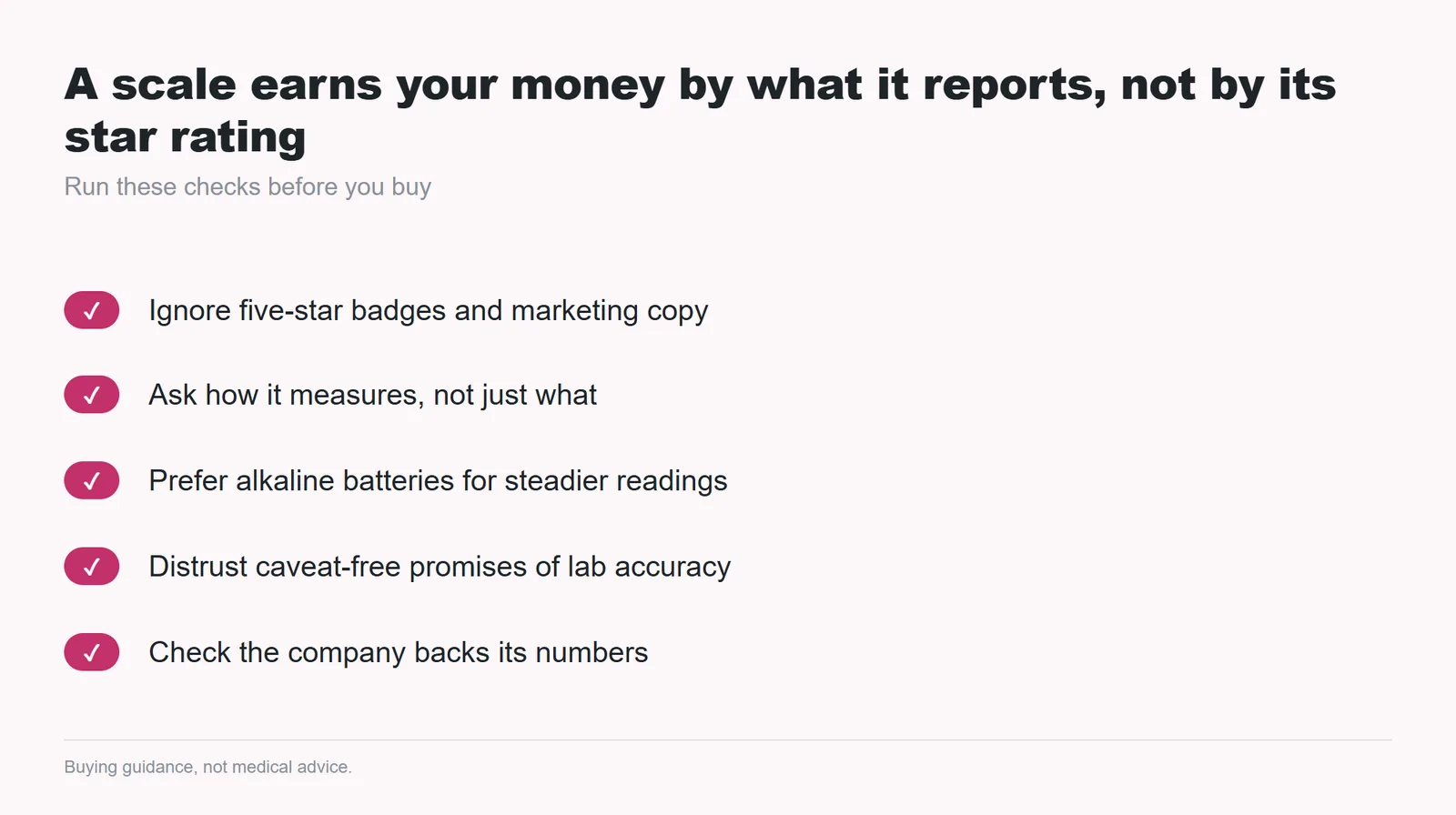
Search "best rated smart scale" and you'll get a wall of five-star badges and not much else. A high star rating tells you people liked the app or the setup, not whether the device can actually track your body composition with any consistency. When you're chasing the best smart scale 2025 has to offer, look past the marketing and check what the scale measures, how it measures it, and whether the company backs the number with real support.
Electrode count is one of the clearer signals. A basic bathroom scale with two contact points can only estimate the whole body at once, while a top rated smart scale with eight points can break results down by arm, trunk, and leg. That segmental read matters if you train unevenly or want to catch a left-right imbalance early. Battery type matters too. Alkaline batteries give steadier readings than rechargeables in most BIA devices, so a scale that specifies this upfront is being straight with you.
| What to Compare | Basic Bathroom Scale | FitAmplify Smart Scale | Why It Matters |
|---|---|---|---|
| Electrode Points | 2 | 8 | More contact points read body segments instead of one whole-body average |
| Segmental Regions Tracked | 0 | 3 | Separates arms, trunk, and legs so you can spot side-to-side imbalances |
| Private User Profiles | 1 | 8 | Lets a full household track results separately without mixing data |
| Body Metrics Reported per Scan | 1 | 56 | A single weight number can't show muscle, hydration, or trend direction |
If a best smart bathroom scale claims lab-level accuracy for athletes with no caveats, be skeptical. No BIA formulas have been validated against the four-compartment gold standard for athletic bodies, so any scale promising that precision is overselling it. Compare what a scale actually reports, not just how many stars it has.
FAQ
What does athlete mode do on a smart scale?
It swaps the standard BIA calculation for one built on higher lean mass and lower typical body fat. This helps a body scale smart enough to offer both modes avoid mislabeling muscular users as having high body fat. It does not scan any differently, it just interprets the same electrical signal through a different formula.
Is athlete mode more accurate than normal mode?
For very active, high muscle mass users, yes, it tends to run closer to reality. For casual gym-goers or anyone outside that profile, it can actually skew results the wrong way. Neither mode has been validated against lab-grade testing for athletic bodies, so treat both as estimates, not diagnoses.
Who should not use athlete mode?
Sedentary users, people with average body composition, and anyone unsure which mode fits them. Turning it on without meeting the criteria can push readings in a misleading direction. When in doubt, stick with normal mode and track your trend line instead.
Can athlete mode make my body fat percentage look dangerously low?
It can distort numbers if used incorrectly, but the scale itself is not diagnosing anything. ACE considers body fat under about 14% for women or 6% for men dangerously low. If a reading like that shows up, treat it as a prompt to check in with a professional, not a target to chase.
What should I check when comparing a smart scale best for my goals?
Look past star ratings and ask what the best smart weight scale in your price range actually reports beyond weight. If athlete mode is a factor, talk to a registered dietitian about which setting fits your body and goals.
Conclusion
Athlete mode does not change what a smart scale measures. It changes how the scale reads the numbers, adjusting the math for people with more muscle and lower body fat so the results reflect reality instead of a generic formula. That distinction matters whether you use a basic body composition scale or a more advanced one.
The setting is a small piece of a bigger picture: your training, your recovery, and how your body actually feels. If you want help making sense of your numbers, a free consultation with a real coach can point you in the right direction.
References
- Generalized bioelectric impedance‐based equations underestimate body fluids in athletes, NCBI/PMC
- No differences in the body fat after violating core bioelectrical impedance measurement assumptions, NCBI/PMC (BMC Public Health)
- Body Fat Percentage Charting Averages in Men and Women, American Council on Exercise (ACE)
FitAmplify is a wellness product and is not a medical device. It is not intended to diagnose, treat, cure, or prevent any disease. Always consult a qualified healthcare professional regarding any medical concern.