How Does a Smart Scale Measure Body Fat | Guide
How Does a Smart Scale Measure Body Fat? The BIA Signal Path Explained in Plain English
The FitAmplify Team · Reviewed by Ms. Shivani Tomar, RD, Registered (clinical) Dietician, M.Sc Nutrition, 12 years' experience · Updated August 2026 · 13 min read
How does a smart scale measure body fat? It sends a weak, safe electrical current through your body and times how long it takes to pass through, a method called bioelectrical impedance analysis (BIA). Fat resists the current more than muscle does, so a body fat scale smart enough to read that resistance can estimate what your body is made of. It is a quick read, not a lab test.
How a Smart Scale Measures Body Fat
The signal your scale sends
Most smart scales rely on a four-electrode setup: two electrodes push a small, constant current through your body while the other two measure the voltage drop as that current travels. That reading gives the scale two numbers, resistance and reactance, which together describe how easily your tissue conducts electricity. A body composition scale then runs those numbers through equations built from population data to estimate what is fat and what is not.
This is why standing position matters so much. If your feet are not making full contact with all the metal plates, the circuit is incomplete and the reading gets thrown off before the math even starts.
Why weight alone is not enough
A bathroom scale only tells you total mass. It cannot tell you if you lost fat or lost muscle, and it says nothing about where fat is stored in your body. That gap is exactly what pushed BIA into home use: the same impedance reading a smart digital scale takes can be converted into percent body fat, skeletal muscle mass, visceral fat level, fat-free mass, and total body water, all from one scan in seconds.
That range is the real value of this technology. Instead of one flat number, you get a fuller picture of body composition, muscle, fat, water, all pulled from the same signal. The tradeoff is that accuracy depends heavily on the device and the algorithm behind it, which is worth understanding before you talk to a registered dietitian about what your numbers actually mean for your health.
What BIA Actually Reads in Your Body
A smart scale doesn't see fat. It sends a weak electrical current through your feet and measures how much the current is resisted on its way through your body. That resistance number is called impedance, and it's the raw material every other metric on your screen is built from.
Most body fat scale smart devices use four electrodes to do this: two send the current, two read the voltage drop it creates. From that single reading, the algorithm calculates fat percentage, muscle mass, water, and more.
Fat, muscle, and water conduct differently
Here's why the current matters. Muscle and water are packed with electrolytes, so electricity moves through them easily. Fat has almost no water content, so it slows the current down and creates more resistance.
Your scale reads that difference in resistance and uses it, along with your height, weight, age, and sex, to estimate how much of you is fat versus lean tissue and fluid. It's a smart scale for body composition, not a direct measurement of body fat. It's an educated estimate, and a fairly good one, but it still depends on assumptions built into the algorithm rather than a physical count of fat cells.
That's also where accuracy limits creep in. An advanced smart scale can pull impedance data cleanly, but the math converting it into a body fat percentage varies by device, and even well-designed instruments have shown a real range of error against lab-grade reference methods. Understanding that a scale reads electrical resistance, not fat itself, makes the next question worth asking: how much detail can it actually pull from that one signal, and is the smart body-composition scale you're considering reading enough of your body to trust the number.
Four-Point Versus Eight-Point Electrodes
Electrode setupContact points on bodyFat mass accuracy vs. DXABest suited forFour-point2 feet onlyLower agreement with DXA than 8-pointA basic smart bathroom scale for quick trend checksEight-point2 feet + 2 hands (4 points per side)Superior agreement with DXA, more accurate fat mass estimateThe most accurate smart scale option for full-body trackingFour-point wiring2 current electrodes, 2 voltage electrodesSingle whole-body reading onlySimple setups where segmental detail isn't neededEight-point wiringAdds electrode pairs at each limbEnables arm, trunk, and leg readings separatelyCatching left-right or upper-lower imbalancesAny BIA device (reference range)N/A-3.5% to +11.7% constant error across 15 devices testedSetting realistic expectations regardless of electrode count
The jump from four points to eight isn't just about adding more metal to step on. A four-point scale only reads current as it travels foot to foot, so it has to estimate the rest of your body with a formula. An eight-point setup adds hand contacts, which lets the current trace separate paths through your arms, trunk, and legs instead of guessing at them.
That's part of why research comparing the two found eight-electrode segmental BIA tracked closer to DXA scans than four-electrode readings did. If you're comparing a basic bathroom scale against a best body composition scale pick, the electrode count is one of the clearest places the difference shows up. Still, even the better-performing devices carry a real spread of error against lab methods, so no scale, regardless of electrode count, should be read as a lab-precise number.
Which Body Metrics You Actually Get
That error range is exactly why one number on its own can mislead you. A smart fitness scale earns its keep by handing you a full spread of readings instead of a single verdict, so you can watch trends over weeks rather than panic over one bad morning.
Here's what a typical smart scale for weight and body composition reports from a single scan, and roughly what each one tells you:
MetricWhat it showsTypical outputWhy it mattersBody fat percentageShare of weight that is fat mass10-45%Core marker most people track over timeSkeletal muscle massMuscle tissue attached to boneKilograms or poundsFlags muscle loss or gain, not just weight changeVisceral fat levelFat surrounding internal organsScored 1-59 on most devicesLinked to metabolic health more than scale weight aloneTotal body waterFluid as a percentage of body weight45-65%Hydration swings can shift daily readingsFat-free massEverything that is not fat: muscle, bone, water, organsKilograms or poundsShows what's left when fat is subtracted out
Bioelectrical impedance can pull all five of these from one reading, which is more than a BMI calculation alone will ever tell you. That's the real case for picking a best body fat scale over a plain bathroom model: you're not choosing between two numbers, you're choosing between one number and a fuller picture. The FitAmplify Smart Scale reports 56+ metrics per scan, though how many of these you'll actually use day to day is a smaller list than the total count suggests.
How Accurate Are Smart Scales Really
No scale is going to hand you a lab-grade body fat percentage, and any listing that promises the most accurate smart scale on the market should make you raise an eyebrow. Research backs up the skepticism. One study measured 15 BIA devices against a laboratory four-compartment model, the gold standard, and found errors ranging from -3.5% to +11.7%. Only 5 of those 15 devices were statistically equivalent to that reference method.
The gap can widen outside a controlled lab, too. A comparison of four commercial BIA scales in children and adolescents found three of them agreed poorly with DXA scans, and the Tanita TBF-543 swung from -10.51% to +12.81% in boys alone. Search for the best rated smart scale or the Renpho smart scale online and you'll find owners reporting similar spreads, because the technology itself carries this range. It isn't really a brand problem.
What shifts a reading day to day
Hydration is the biggest wildcard. BIA works by sending a weak current through your body and reading the voltage drop, and water conducts that current far more easily than fat does. Drink a large glass of water, finish a workout, or step on the scale first thing after waking up, and the number will move even though nothing about your body actually changed overnight.
Electrode contact matters too. A four-electrode setup relies on two points to send current and two to read the voltage, so dry skin, lotion, or standing at an angle can throw the reading off. None of this means your scale is broken. It means one reading is a snapshot, not a verdict, which is part of why FitAmplify pairs each scan with expert review instead of leaving you to interpret a single number alone.
How to Get an Accurate Reading
A little consistency turns your smart scale into a real tracking tool instead of a source of confusion.
Weigh in at the same time each day. Morning, before food or water, is easiest to repeat.
Step on barefoot, with dry skin. Impedance depends on the current reaching your skin cleanly, and lotion, socks, or dry patches interfere with the read.
Stand still and centered on the electrodes. A four-electrode smart bluetooth scale sends current through two points and reads voltage through the other two, so shifting your weight or standing at an angle changes the path that current takes.
Wait at least a couple of hours after exercise. Sweat and shifted fluid levels change what the scale reads, even though your actual tissue hasn't changed.
Use the same smart weigh scale every time. Switching devices mid-tracking introduces a new margin of error on top of your body's normal day-to-day shifts, and even well-built BIA devices can show constant error from -3.5% to +11.7% against lab-grade reference methods.
Track trends in the smart scale app, not single numbers. One reading can wobble; some commercial BIA scales have shown limits of agreement as wide as -10.51% to +12.81% against DXA in certain groups, which is exactly why a week-over-week trend line tells you more than any one scan.
None of these steps require special equipment or timing tricks. They just remove the noise so the number you see reflects your body, not your routine. If a reading still looks off, it's worth a second look with someone who can read the full picture, which is where expert review comes in.
What to Look for When Choosing One
Specs on a product page only tell you so much. If you're comparing a bluetooth smart weight scale for your own use, the electrode count and app quality matter more than a shiny "best smart scale 2025" badge.
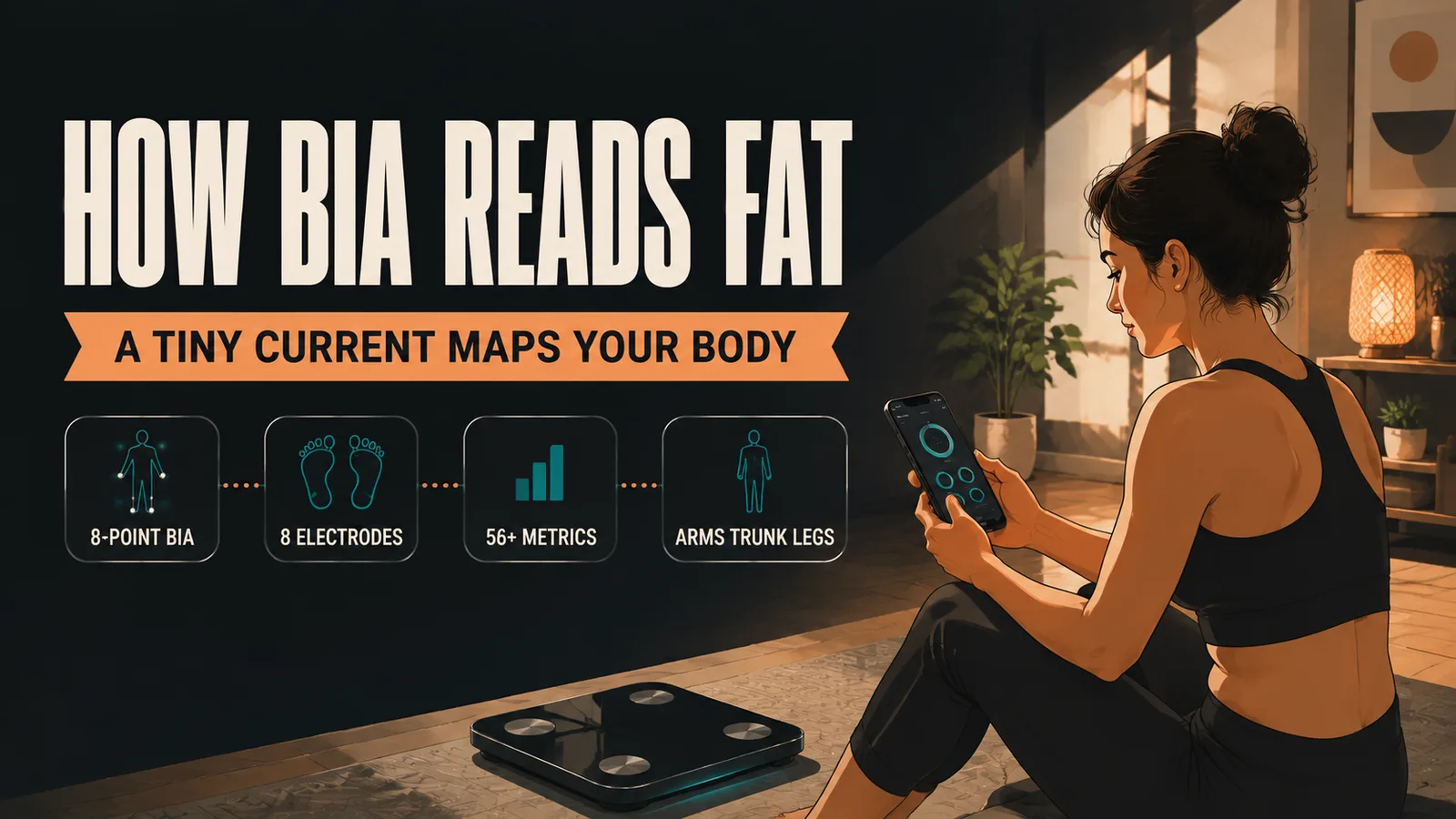
Start with what the scale actually measures. An 8-point BIA device reads impedance across your arms, trunk, and legs separately, which is how you catch a left-right imbalance a basic bathroom scale would never show you. A four-electrode model that only reads foot-to-foot skips that detail entirely, so if segmental data matters to you, check the electrode count before you check the price.
Beyond the numbers on screen
The best smart bathroom scale for you is the one you'll actually use every week, paired with an app that turns raw impedance readings into something you can act on. Look for a free tier with no hidden paywall, support for multiple household profiles, and export options if you ever want a health professional to review your history. Bioelectrical impedance can surface body fat percentage, muscle mass, visceral fat level, and total body water in one scan, which is a lot more useful than a single weight number.
Don't assume "top rated smart scale" means most accurate. Review accuracy against a real reference method before you trust the marketing copy, since even well-regarded BIA devices have shown constant error ranging from -3.5% to +11.7% against lab-grade testing, with only a third of tested devices matching the reference closely. A scale that tracks trends consistently over time is more valuable than one chasing lab-level precision on a single reading.
Finally, think about what happens when a number looks strange. A scale that syncs cleanly to the free FitAmplify app and connects you to expert review when something doesn't add up will serve you better long term than one that just spits out data and leaves you guessing.
FAQ
How does a smart scale measure body fat?
It sends a low, safe electrical current through your body and times how long the current takes to pass through, since fat and muscle carry it at different speeds. That's bioelectrical impedance analysis, or BIA, the same underlying tech used in a smart scale application or a full body scale smart system. Your scale then runs the result through formulas that estimate body fat percentage, water, and muscle.
Is a smart scale accurate for tracking body fat?
It's accurate enough to spot trends, but not exact enough to treat as a lab result. In one comparison against lab-grade testing, BIA devices showed constant error from -3.5% to +11.7%, and most fell short of matching the reference method exactly. Watching the trend line over weeks matters more than any single number.
What makes one smart scale better than another?
Electrode count and placement matter most. A four-electrode device only reads current through two points, while an 8-point BIA smart scale reads arms, trunk, and legs separately for a fuller picture. If you're comparing which smart scale is best for you, prioritize segmental reads over flashy extras, since that's usually the detail buried under review roundups claiming to name the best smart weight scale on the market.
Can a smart scale replace a doctor's body composition test?
No. A home BIA scale gives you a useful estimate for tracking change over time, not a diagnosis. If a reading looks off or worries you, that's a good moment to talk to a registered dietitian instead of guessing at what it means.
Does the app that comes with a smart scale matter?
Yes, a lot. The scale only measures impedance, but a good body scale smart companion app is what turns that raw signal into metrics like visceral fat, metabolic age, and hydration you can actually use. Look for a smart scale application with clean syncing and real history, not just a single snapshot each time you weigh in.
Conclusion
A body composition scale is really just a translator. It sends a faint current through you, measures how much resistance that current meets, and turns that resistance into numbers you can actually use. Those numbers, like body fat percentage, visceral fat, and total body water, tell you far more about your health than a single weight reading ever could.
No scale, smart or otherwise, replaces a real conversation about your health. If your numbers shift in a way you don't understand, or you just want a second opinion on what they mean, book a free consultation with someone who can walk through your results with you. That's a better next step than guessing alone.
References
Body fat estimates from bioelectrical impedance equations in..., NIH/NCBI (PMC)
Dry Electrode-Based Body Fat Estimation System with Anthropometric Data for Use in a Wearable Device, NIH/NCBI (PMC)
Quantification of whole-body and segmental skeletal muscle mass using phase-sensitive 8-electrode medical bioelectrical impedance devices, NIH/NCBI (PMC)
BMI and Bioelectrical Impedance Analysis: Body Composition Assessment Identifying Elevated Body Fat in Normal-Weight Young Adults, NIH/NCBI (PMC)
Assessing the reliability and cross-sectional and longitudinal validity of fifteen bioelectrical impedance analysis devices, NIH/NCBI (PMC)
Validity of Four Commercial Bioelectrical Impedance Scales in Measuring Body Fat among Chinese Children and Adolescents, NIH/NCBI (PMC)
No differences in the body fat after violating core bioelectrical impedance measurement assumptions, NIH/NCBI (PMC)
Factors affecting bioelectrical impedance measurements in humans, PubMed (NIH/NLM)
FitAmplify is a wellness product and is not a medical device. It is not intended to diagnose, treat, cure, or prevent any disease. Always consult a qualified healthcare professional regarding any medical concern.